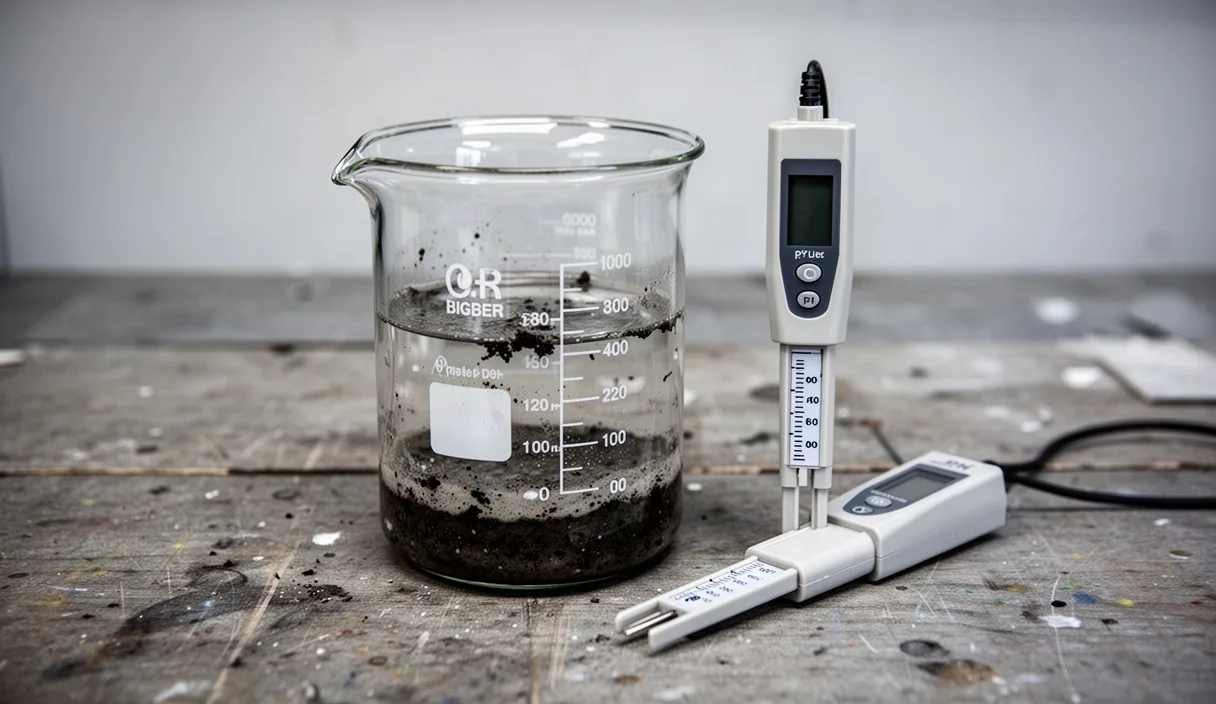
You will use extensive cereal rye root systems to fracture dense subsoil layers without running a heavy tiller. Terminate the cover crop at the right bloom stage to deposit stable carbon into your beds.
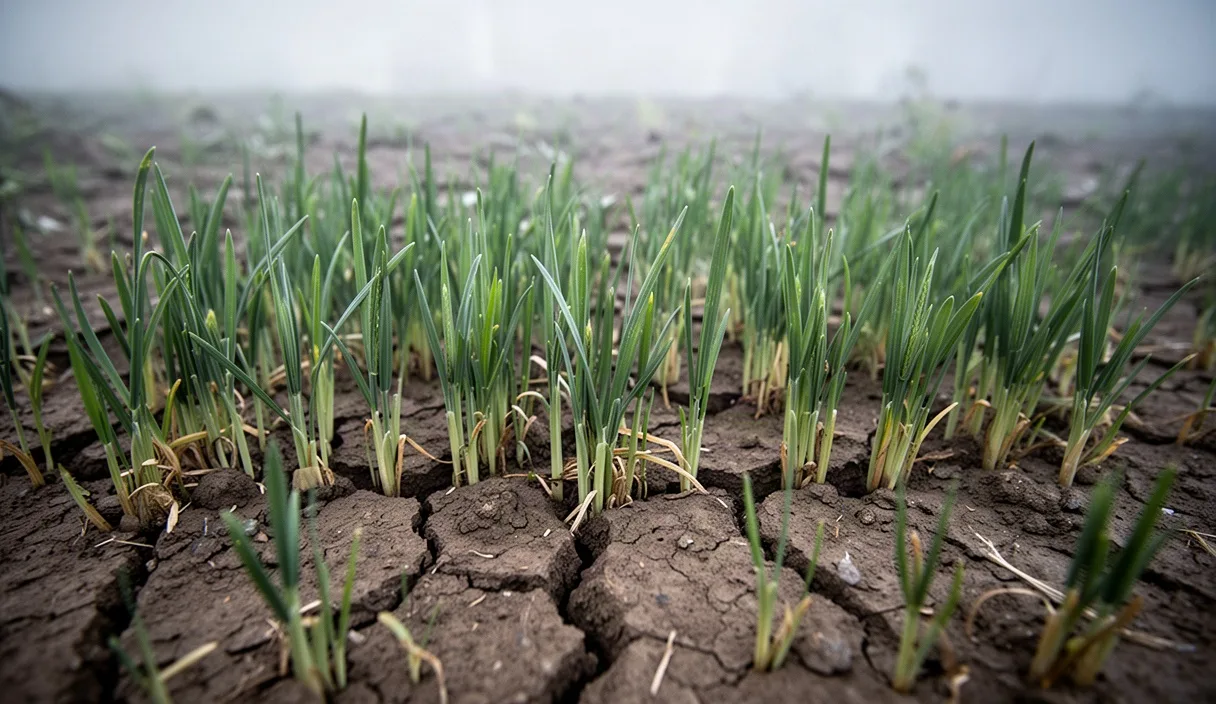

- Broadcast winter rye seed at one hundred twenty grams per ten square meters in late autumn.
- Rely on fibrous rye roots to break plow pans and channel winter precipitation downward.
- Terminate the stand by crimping or mowing when the crop begins pollen shed in mid-spring.
Heavy clay soils present a distinct physical barrier to production. When farm equipment, heavy livestock, or persistent rains run over high-clay ground, the microscopic mineral plates collapse together, eliminating the macropores required for water infiltration and gas exchange. Deep mechanical ripping can shatter this dense layer temporarily, but the repair is fleeting: subsequent rains resettle the unstable particles, often resulting in an even denser hardpan within a single season. Biological remediation provides a durable alternative by inserting dynamic organic structures directly into the compacted subsoil zone.
Winter rye, known botanically as Secale cereale, is the premier temperate cover crop for rebuilding structural porosity in degraded clay. Unlike taprooted crops that exert singular downward pressure through localized paths of least resistance, cereal rye produces an extensive, highly branched fibrous root system that forces apart structural units of clay at the millimeter level. When managed with precise timing, winter rye converts depleted, anaerobic subsoils into aggregated, well-aerated seedbeds while leaving a protective carbon mat on the surface.
How Fibrous Root Networks Alter Dense Subsoil Physics
Clay soils are composed of microscopic mineral sheets carrying negative surface charges. In compacted conditions, these sheets align parallel to one another, forming massive plates with bulk densities that frequently exceed 1.55 grams per cubic centimeter. At this density, the root elongation of most cash crops stops entirely because the roots cannot generate the mechanical turgor pressure needed to penetrate the soil matrix. Winter rye circumvents this limitation through sheer root quantity and a high root-surface-area-to-volume ratio.
A single stand of cereal rye can construct between 3,000 and 4,500 feet of root mass per square foot of surface soil within its upper 36 inches. As these root tips advance, they release mucilage, a complex polysaccharide that lubricates the root cap. This substance also coats adjacent clay colloids, binding them together into water-stable micro-aggregates. When dry periods arrive, the roots pull moisture uniformly from the clay, inducing micro-cracks along natural fault lines. When the roots rehydrate, they expand radially, locking those micro-cracks open and transforming a massive, continuous clay layer into a porous crumb structure.
| Soil Metric | Untreated Compacted Clay | Post-Rye Remediated Clay |
|---|---|---|
| Bulk Density | 1.58 g/cm³ | 1.34 g/cm³ |
| Water Infiltration Rate | 0.18 inches/hour | 1.12 inches/hour |
| Macroporosity (air spaces) | 7.4% of volume | 16.8% of volume |
| Water-Stable Aggregates | 28% of total soil mass | 61% of total soil mass |
When the rye roots die in the spring, their biological footprint remains. The thousands of hair-like channels, known as biopores, stay intact as the root tissues decompose. These interconnected pathways allow the roots of subsequent cash crops, such as corn, brassicas, or squash, to bypass the mechanical resistance of the subsoil. Water follows these same biopores downward, which reduces surface pooling and stops seasonal topsoil runoff.
Calculating Autumn Seeding Rates for Solid Ground Cover
Establishing winter rye on heavy clay requires higher target populations than those used on sandy loams. Clay forms a crust quickly under late autumn rains, which drops the baseline emergence rate. To break up compaction, the grower needs maximum tillering and dense root overlap before the ground freezes. A spindly stand of rye cannot exert sufficient lateral pressure to aggregate dense soil particles.
If you are drilling seed directly into clay with double-disk openers, target a rate of 90 to 110 pounds per acre. Adjust your drill depth to between 0.75 and 1.25 inches. Planting shallower than 0.75 inches leaves the seed vulnerable to dry autumn winds and bird predation, while planting deeper than 1.5 inches in heavy clay forces the seedling to exhaust its endosperm reserves before the coleoptile breaches the surface crust.
If you broadcast the seed across the surface, increase the rate to 125 to 150 pounds per acre to compensate for poor seed-to-soil contact. Immediately follow broadcasting with a light pass of an aerator, shallow vertical tillage tool, or cultipacker. On small commercial market gardens, this corresponds to roughly 3.0 to 3.5 pounds of clean seed per 1,000 square feet. Do not simply leave broadcast seed on undisturbed clay; without soil incorporation or firm rolling, germination will fall below acceptable thresholds, resulting in patchy weed competition instead of uniform root coverage.
Overwintering Biology of Secale Cereale
Winter rye possesses cold tolerance that exceeds all other small grain cover crops, surviving temperatures as low as -30 degrees Fahrenheit once established. This resilience stems from an active cold-acclimation process triggered by declining photoperiods and ambient temperatures between 34 and 45 degrees Fahrenheit. During this transition, the plant accumulates soluble sugars, proline, and antifreeze proteins inside its crown tissue, preventing ice crystallization within the cell walls.
Fall vegetative development focuses heavily on tillering, which is the generation of secondary shoots from the base of the plant. A well-nourished rye plant can produce between four and eight vigorous tillers before freezing weather halts upward growth. Each individual tiller develops its own independent crown and root system, multiplying the underground root density without requiring additional surface seed. In high-clay soils, this crown structure also protects the soil surface against frost heaving, a physical phenomenon in which expanding subsoil ice pushes shallow-rooted plants completely out of the ground.
Rye maintains low-level biological activity under snow cover, respiring slowly and holding the surrounding soil profile stable against winter erosion. As soon as soil temperatures in the top two inches reach 38 degrees Fahrenheit in early spring, the crop breaks dormancy. It begins drawing up stored moisture aggressively, a critical characteristic for growers working with clay. Saturated clay soils warm very slowly in spring because of the high specific heat of water; by transpiring gallons of excess moisture out of the profile each day, a vigorous stand of rye dries the ground and accelerates spring soil warming by several weeks.
Timing Spring Termination at the Anthesis Stage
Terminating cereal rye requires careful timing. If you terminate the stand too early, when the crop is still in the vegetative boot stage (12 to 18 inches tall), the low carbon-to-nitrogen ratio causes the succulent tissue to rot within ten days. This early termination fails to build durable surface armor, provides zero long-term weed suppression, and leaves the clay unprotected against driving spring rains. Conversely, allowing the crop to form hard seed heads creates a volunteer grain weed problem that can persist for years.
The correct window for mechanical roller-crimping occurs precisely at anthesis, which is late flowering. You can verify anthesis by inspecting the seed heads across the field. Anthesis is underway when pale yellow anthers emerge from the florets and shed visible pollen clouds when brushed by hand or equipment. At this biological stage, the plant has exhausted its non-structural carbohydrate reserves in the base of the stem to push out reproductive structures. When crushed and snapped by a roller-crimper at anthesis, the stem cannot transport water or generate new tillers, resulting in complete, clean termination without the use of synthetic herbicides.
- Inspect the canopy: Walk the field daily once rye passes the boot stage and the seed head fully emerges from the flag leaf sheath.
- Check anther extrusion: Look for yellow anthers extending along the middle third of the seed head; do not terminate if only the very tips show color.
- Test stem rigidity: Bend several stems near the soil surface. They should feel hollow, fibrous, and slightly brittle rather than fleshy.
- Operate the roller-crimper: Run the crimper perpendicular or at a 45-degree angle to the direction of planting, ensuring the blunt chevron blades crush the vascular bundles every seven to eight inches along the stem.
- Evaluate termination: Return to the field four days later. The down rye should appear dull gray-green with no upright, twisting stems.
Managing Nitrogen Immobilization from High-Carbon Straw
Terminating cereal rye at anthesis yields substantial aboveground biomass, often between 4,000 and 8,000 pounds of dry matter per acre. However, mature rye straw possesses a carbon-to-nitrogen (C:N) ratio that frequently exceeds 60:1, and sometimes reaches 80:1. Soil microorganisms require a C:N ratio near 24:1 to sustain their metabolic functions. When presented with an immense volume of high-carbon straw, soil bacteria and fungi pull all available plant-ready nitrate and ammonium from the surrounding soil water to process the carbon.
This process is called nitrogen immobilization. While the nitrogen is not lost from your farm, it remains locked inside microbial bodies for six to ten weeks until those populations die and cycle. If you plant a heavy-feeding crop directly behind mature rye without modifying your fertility program, that cash crop will show severe nitrogen deficiency, turning pale yellow and stalling early vegetative growth.
- Apply targeted starter nitrogen: Place 30 to 50 pounds of actual nitrogen per acre directly in the planting furrow or in a concentrated 2x2 band (two inches to the side, two inches below the seed) to feed the cash crop while soil microbes consume the surface carbon.
- Interseed legumes in autumn: Add hairy vetch (18 to 22 pounds per acre) or crimson clover (12 to 15 pounds per acre) into your autumn rye mix. The legume fixes atmospheric nitrogen and drops the overall cover crop residue C:N ratio down near 30:1 at termination.
- Select low-demand succession crops: Follow high-biomass rye with large-seeded legumes like dry beans or soybeans, which fix their own nitrogen and do not rely on high levels of dissolved soil nitrogen early in the season.
Direct-Sowing Main Season Crops into Crimped Residue
Direct-sowing cash crops into a thick, crimped rye mulch on clay soil requires specialized equipment configuration. Standard light planters designed for prepared beds will ride up on top of the tough straw mat, dropping seeds directly onto the surface where they quickly desiccate. To achieve reliable germination, your planter or no-till drill must slice through the residue, open a defined V-slot in the underlying clay, place the seed at the correct depth, and firmly press the slot closed.
Equip your planter row units with sharp, smooth, or lightly fluted coulters mounted directly ahead of the double-disk openers. The coulters must cut cleanly through the rye straw rather than pushing the straw down into the soil trench, a failure known as "hairpinning." If hairpinning occurs, the seed sits wedged inside a pocket of dry straw instead of making contact with the moist clay beneath, preventing water imbibition.
Down-pressure springs or hydraulic down-force systems are mandatory. Heavy clay covered by rye mulch resists penetration; you will need between 350 and 500 pounds of true down-pressure per row unit to hold the disks at your intended depth. Use cast-iron or heavy rubber-spoke closing wheels rather than smooth cast-iron wheels. Smooth wheels can smear the wet sidewalls of a clay furrow, creating a tight channel that roots cannot escape when the clay dries. Spoked closing wheels shatter the sidewall, crumbling friable clay back over the seed while pressing the surface residue flat.
Common Mistakes
- Terminating rye during the boot stage: Mowing or crimping before flowering causes rapid regrowth from the crown, forcing the grower to repeat termination passes or resort to tillage, which ruins the emerging soil structure.
- Underestimating autumn seeding depth: Leaving rye seed on the surface of heavy clay without adequate incorporation leads to poor stands and severe winterkill from frost heaving.
- Planting into cold, wet residue too early: The thick rye thatch insulates the clay from direct solar radiation. Attempting to plant warm-season crops like sweet corn or melons before the soil temperature at a four-inch depth reaches 55 degrees Fahrenheit causes seed decay and patchy emergence.
- Neglecting planter down-pressure: Failing to add sufficient ballast or spring pressure to planter row units results in shallow seed placement and poor seed-to-soil contact beneath the mulch layer.
- Ignoring the early nitrogen deficit: Failing to provide available nitrogen at planting time leaves main season crops starved of nutrition during their initial four weeks of development.
Practical Next Steps
Remediating compacted clay is not an overnight event; it requires a structured seasonal progression. If you are preparing to implement cereal rye on compacted acreage, proceed with these actions:
- Assess baseline compaction: Use a soil penetrometer or a simple steel wire surveyor flag when the clay is at field capacity. Note the exact depth where resistance spikes, which marks your hardpan layer. Take baseline bulk density samples if you want quantitative records of structural progress.
- Order winter-hardy cereal rye: Source certified northern-grown seed with a confirmed germination rate of 85% or higher. Calculate your acreage needs based on a minimum target rate of 100 pounds per acre for drilling or 130 pounds per acre for broadcasting.
- Calibrate your planting equipment: Set disk openers and down-pressure assemblies in late summer. Ensure that drills can reliably clear autumn debris and cut a true one-inch depth in heavy conditions.
- Sow precisely four to six weeks before your first killing frost: This window maximizes autumn tillering and root spread without allowing the crop to enter jointing before the winter freeze.
- Arrange spring termination tools in advance: If you plan to crimp the crop mechanically, check that your tractor front-mount or rear-three-point hitch is fitted to handle the ballast weight required for full roller-crimper efficacy. For comprehensive site-specific soil management strategies, consult your local agricultural extension service or a certified crop adviser.
This guide serves educational purposes; consult your regional agricultural extension office for site-specific soil testing and plant health orders. Disclaimer