You will distinguish between mobile and immobile nutrient deficiencies by observing where yellowing first appears on the plant. Apply targeted foliar sprays or root drenches to restore dark green foliage.

- Nitrogen deficiency appears first on older bottom leaves as mobile nitrogen moves upward.
- Iron chlorosis shows distinct green veins on pale new leaves near the growing tip.
- Check soil moisture and temperature before adding mineral salts to cold, wet soil.
Yellowing leaves in a bed of spinach, butterhead lettuce, or Tuscan kale signal a metabolic stall, but misreading the signal wastes money and weeks of the growing season. Chlorosis occurs when plant tissue cannot synthesize adequate chlorophyll. Because nitrogen and iron both participate directly in chlorophyll production and enzyme activation, their deficiencies produce visually similar yellow pigments. However, their physiological behavior inside vascular tissue is fundamentally different, dictating distinct visual patterns and diametrically opposed corrective protocols.
Applying high-nitrogen fertilizers to an iron-deficient crop will burn tender feeder roots, drive soil pH further outside the optimal range, and fail to green the leaves. Conversely, applying iron chelates to soil starved of nitrogen leaves crops stunted and fibrous. Successful diagnosis requires inspecting which leaves yellow first, assessing the leaf vein coloration against the blade, and auditing root-zone parameters including temperature and electrical conductivity before mixing any soil drenches or foliar sprays.
Mobile Versus Immobile Nutrient Transport in Plants
Plants manage mineral nutrients through two distinct logistical models: phloem-mobile and phloem-immobile transport. When a plant experiences a supply shortage at the root level, its internal survival strategy dictates where the remaining nutrients go. Nitrogen is highly mobile within the vascular system. When root uptake falters, the plant mobilizes nitrogen out of older, fully expanded foliage through the phloem and reallocates those amino acids to the young, developing leaves at the apical meristem. The plant sacrifices its foundation to keep its growth point alive.
Iron behaves in the opposite manner. Once incorporated into chloroplast structures and catalytic enzymes within leaf tissue, iron becomes structurally fixed. The plant cannot retrieve iron from mature leaves to support new growth. If roots fail to absorb iron from the soil solution, whether due to an absolute mineral lack or a biochemical lock, the newly expanding tissue starves while the mature base of the plant remains dark green.
Understanding this vascular divide allows growers to establish an immediate triage system in the field. When scouting leafy greens, looking down from above provides an incomplete picture; you must examine the plant from soil line to shoot tip. The precise anatomical location of chlorotic symptoms reveals the mobility class of the missing element before any laboratory assay returns results.
| Diagnostic Parameter | Nitrogen (N) Deficiency | Iron (Fe) Deficiency |
|---|---|---|
| Mobility Status | Highly mobile via phloem | Immobile; fixed in structural tissue |
| Initial Site of Chlorosis | Oldest, lowermost baseline leaves | Youngest, newly emerging crown leaves |
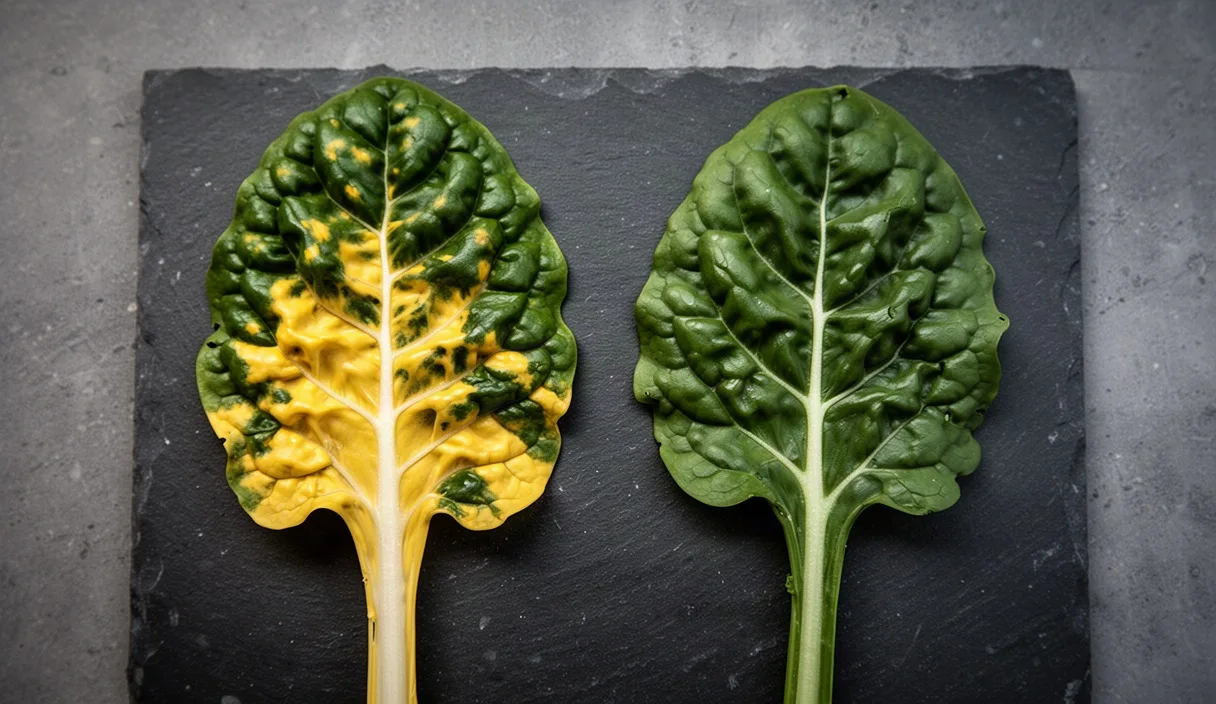
| Vein Appearance | Veins and lamina yellow simultaneously | Veins stay dark green; lamina turns yellow or white |
| Leaf Texture and Size | Stunted, thin, premature senescence | Normal initial size, brittle in severe cases |
| Usual Root-Zone Trigger | Leaching, low organic matter, cold soils | Alkaline pH (above 7.2), waterlogging, cold soils |
Visual Symptoms of Nitrogen Starvation on Older Foliage
Nitrogen starvation presents as generalized, uniform chlorosis starting at the base of the plant. In leafy crops like Swiss chard, head lettuce, and Asian greens, the lowermost outer leaves lose their deep luster, shifting from forest green to chartreuse, and finally to a pale, washed-out yellow. Because nitrogen constitutes a core building block of the chlorophyll molecule, the loss of pigment affects the entire leaf surface. The main veins, secondary veins, and interveinal lamina yellow concurrently, creating a uniform, flat hue.
As the deficiency deepens, older leaves dry down to a pale tan or paper-like texture and drop prematurely. Growth slows across the entire plant. Petioles often thin out, and the crop takes on a rigid, upright posture as cell division decelerates. In brassicas like collards and mustard greens, nitrogen depletion frequently triggers the accumulation of anthocyanin pigments, causing the yellowed outer leaves to take on pink, purple, or red margins alongside general leaf bleaching.
Yield loss during nitrogen starvation is volumetric. The leafy canopy fails to close, light interception drops, and the harvestable biomass decreases rapidly. A simple field check involves lifting the outer skirt of leaves: if the yellowing is concentrated entirely on the bottom third of the plant while the heart maintains acceptable color, nitrogen mobilization is active, and root-zone nitrogen availability is insufficient to maintain total canopy demand.
Identifying Interveinal Chlorosis on Young Growth
Iron chlorosis creates a sharp, high-contrast visual pattern localized entirely at the center of the plant or the tips of new runners. The emerging inner leaves of lettuce heads, spinach rosettes, or endive display distinct interveinal chlorosis. The primary and secondary veins remain dark green, while the interveinal tissue turns lemon yellow. In extreme cases, the chlorotic lamina loses all pigmentation, turning ivory or translucent white, while the skeletal vascular network remains sharply outlined in green.
Because iron acts as an essential catalyst for chlorophyll synthesis without actually residing in the center of the chlorophyll ring (a spot reserved for magnesium), the leaf margins and veins retain functional chloroplasts longest. The tissue directly adjacent to the vein receives trace amounts of iron delivered through the xylem transpiration stream, while the cells further away in the mesophyll starve. Unlike nitrogen-deficient foliage, iron-chlorotic leaves rarely exhibit purple anthocyanin flushes.
If uncorrected, the edges of these pale, iron-deprived leaves turn necrotic. Scorched, brown margins develop on young foliage because the bleached cells lack the pigments required to dissipate excess light energy, leading to photo-oxidative sunburn. When inspecting greens for iron deficiency, focus exclusively on the inner whorl: if the newest leaves emerge pale yellow with an intact green vascular framework while the lowermost base leaves remain dark green, iron transport failure is the culprit.
The Role of Soil Temperature in Nutrient Lockout
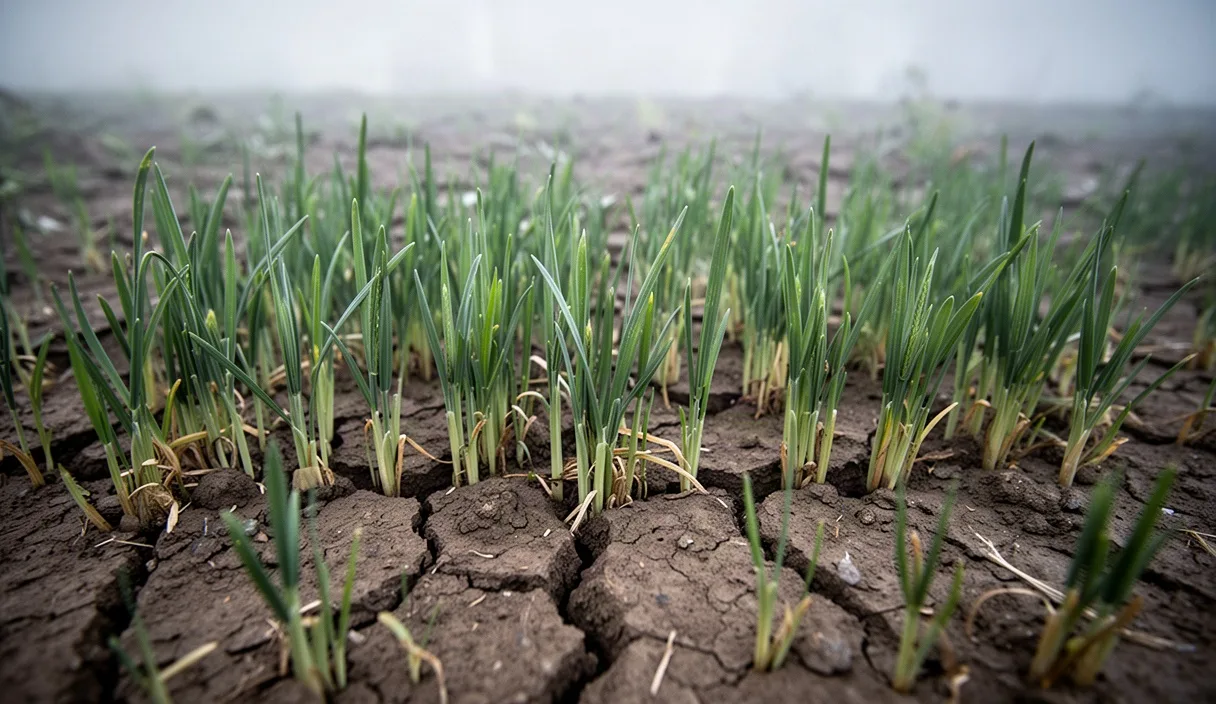
Diagnosing chlorosis requires monitoring root-zone temperature alongside visual leaf cues. Many spring greens suffer from nutrient deficiencies even when the soil contains abundant minerals. The root zone must maintain adequate thermal energy for biological transformations and active ion transport across root cell membranes. When soil temperatures sit below 10 degrees Celsius, both nitrogen and iron uptake pathways experience sharp physiological bottlenecks.
Nitrogen availability depends heavily on microbial activity. Soil microbes convert organic matter into ammonium (mineralization) and subsequently into nitrate (nitrification). Nitrosomonas and Nitrobacter bacteria operate at minimal capacity in cold soil. Nitrification drops off sharply below 12 degrees Celsius and halts almost completely below 5 degrees Celsius. If you plant greens into cold, saturated spring soils, organic fertilizers sit inert. Plants starve for nitrate despite heavy applications of compost, blood meal, or feather meal.
Iron availability, on the other hand, depends on root metabolic activity and soil air-to-water ratios. Leafy greens take up iron primarily in the reduced ferrous (Fe2+) state. Dicotyledonous crops run an active strategy: root epidermal cells pump protons into the rhizosphere to lower local pH and activate ferric chelate reductase enzymes. Cold soils, combined with the low oxygen levels common in compacted or waterlogged ground, suppress root respiration. Lacking cellular energy, roots cannot acidify the rhizosphere or reduce ferric iron (Fe3+) into the plant-usable ferrous form. Cold, wet soil consistently induces transient iron chlorosis, which often resolves naturally once the root zone warms past 15 degrees Celsius.
Diagnostic Protocol for Suspected Temperature Lockout
- Insert a calibrated soil thermometer 8 centimeters into the root zone at 08:00. If the reading is below 11 degrees Celsius, biological availability of both nitrogen and iron is impaired regardless of soil test values.
- Check soil moisture using a tensiometer or direct core sample. Soil saturation above field capacity excludes oxygen, preventing root respiration and stopping iron reduction enzymes.
- Temporarily suspend heavy applications of dry soil amendments; unmineralized organic nitrogen will accumulate and cause ammonium toxicity or salt burn once the soil abruptly warms.
Emergency Foliar Feeding Techniques for Rapid Recovery
When chlorosis appears in fast-maturing crops like baby leaf spinach or mesclun mixes, waiting for root-zone remediation is too slow. Foliar applications bypass inactive, cold, or pH-compromised root systems by delivering ions directly through the stomata and cuticular cracks of the leaves. Foliar feeding acts as an immediate stopgap, not a permanent fertility program.
Correcting Nitrogen Deficiencies via the Foliar Route
For nitrogen-deficient crops, apply a 0.5 percent to 1.0 percent solution of feed-grade urea, or use an enzymatic liquid fish hydrolysate diluted at a rate of 15 milliliters per liter of clean water. Urea supplies neutral, uncharged molecules that penetrate the waxy leaf cuticle four times faster than nitrate or ammonium ions. Spray when the air temperature sits between 13 and 22 degrees Celsius during early morning hours while humidity remains above 65 percent. High humidity prevents droplets from evaporating quickly, extending the absorption window. Avoid concentrations higher than 1.5 percent, as salt accumulation will cause leaf-tip necrosis on sensitive greens like butterhead lettuce.
Correcting Iron Deficiencies via Chelate Sprays
To halt iron chlorosis, apply chelated iron directly to the canopy. Use iron ethylenediaminetetraacetic acid (Fe-EDTA) only if the spray tank water has a pH below 6.5. If your water source is alkaline, use iron diethylenetriaminepentaacetic acid (Fe-DTPA) or iron ethylenediamine-N,N'-bis(2-hydroxyphenylacetic acid) (Fe-EDDHA). Dissolve 1.0 to 1.5 grams of chelated iron powder per liter of water. Add an organic non-ionic surfactant or yucca extract at a rate of 0.5 milliliters per liter to reduce droplet surface tension, ensuring a thin, uniform liquid film across the waxy leaves rather than bead-like droplets.
- Calibrate your sprayer to produce a fine mist (100 to 200-micron droplet size) rather than coarse streams.
- Coat the undersides of the leaves thoroughly; stomatal density is higher on the abaxial leaf surface, increasing nutrient intake rates.
- Reapply the foliar treatment seven days later. Because iron does not translocate, newly emerging leaves will require their own topical coating until the root-zone conditions improve.
Long-Term Bed Amendments to Prevent Recurrence
Relying on foliar sprays through an entire production cycle is inefficient and labor-intensive. Permanent correction requires tailoring the soil chemistry and physical structure to ensure baseline root-zone availability.
Soil pH represents the primary switch governing iron solubility. In soils with a pH above 7.3, iron precipitates into insoluble ferric hydroxides and oxides, rendering it unavailable to plants. For beds showing recurrent iron chlorosis, apply elemental agricultural sulfur to reduce the pH into the target range of 6.2 to 6.7 for most leafy greens. Apply sulfur at a rate dictated by soil texture: sandy soils typically require 150 grams per square meter to lower pH by one full unit, while clay loams require up to 450 grams per square meter. Work sulfur into the top 15 centimeters of soil at least three months before planting, as thiobacillus bacteria require warm, moist conditions to convert elemental sulfur into plant-available sulfate.
For ongoing nitrogen management, incorporate stable organic matter with predictable mineralization rates. Finished compost with a carbon-to-nitrogen ratio between 10:1 and 15:1 provides a steady release of ammonium and nitrate without tying up free nitrogen. To support heavy brassicas and dense-cut salad mixes, supplement beds with hydrolyzed feather meal (12-0-0) or blood meal (12-0-0) applied at 50 to 80 grams per square meter prior to seeding. These amendments rely on biological breakdown; apply them two weeks before peak nutrient demand to match the release curve to the crop growth stage.
Aeration amendments are equally critical. Heavy, compacted soils that sit cold and wet exacerbate both iron lockout and microbial denitrification. Subsoil with a broadfork to fracture hardpans without turning subsoil onto the surface. Incorporate coarse, well-aged compost or leaf mold to elevate total pore space, ensuring oxygen reaches the root interface to drive the cellular pumps that bring trace minerals into the plant.
Common Mistakes
- Diagnosing under artificial grow lights without color correction: High-pressure sodium or warm-spectrum LED lights distort color perception. A nitrogen-deficient leaf can look healthy, and subtle interveinal iron chlorosis disappears under yellow light. Always inspect crops under natural daylight or color-balanced (5000K to 6500K) illumination.
- Pouring iron sulfates onto alkaline soils: Adding inorganic iron sulfate to soils with a pH above 7.2 results in immediate chemical lockout. The iron quickly binds with hydroxyl groups and becomes insoluble. Always use Fe-EDDHA chelates in alkaline soils, or lower the overall soil pH with elemental sulfur before adding standard iron sources.
- Over-irrigating to cure a deficiency: Growers often mistake chlorosis for a generic lack of water, saturating the bed further. Excessive moisture cools the soil, drives out oxygen, kills fine feeder roots, and worsens iron deficiency. Let the top 3 centimeters of soil dry between irrigations.
- Applying high-salt fertilizers during cold spells: Drenching cold soil with synthetic nitrate or concentrated manure extracts when roots are dormant burns root hairs and elevates soil electrical conductivity without curing chlorosis.
Taking Action in the Field
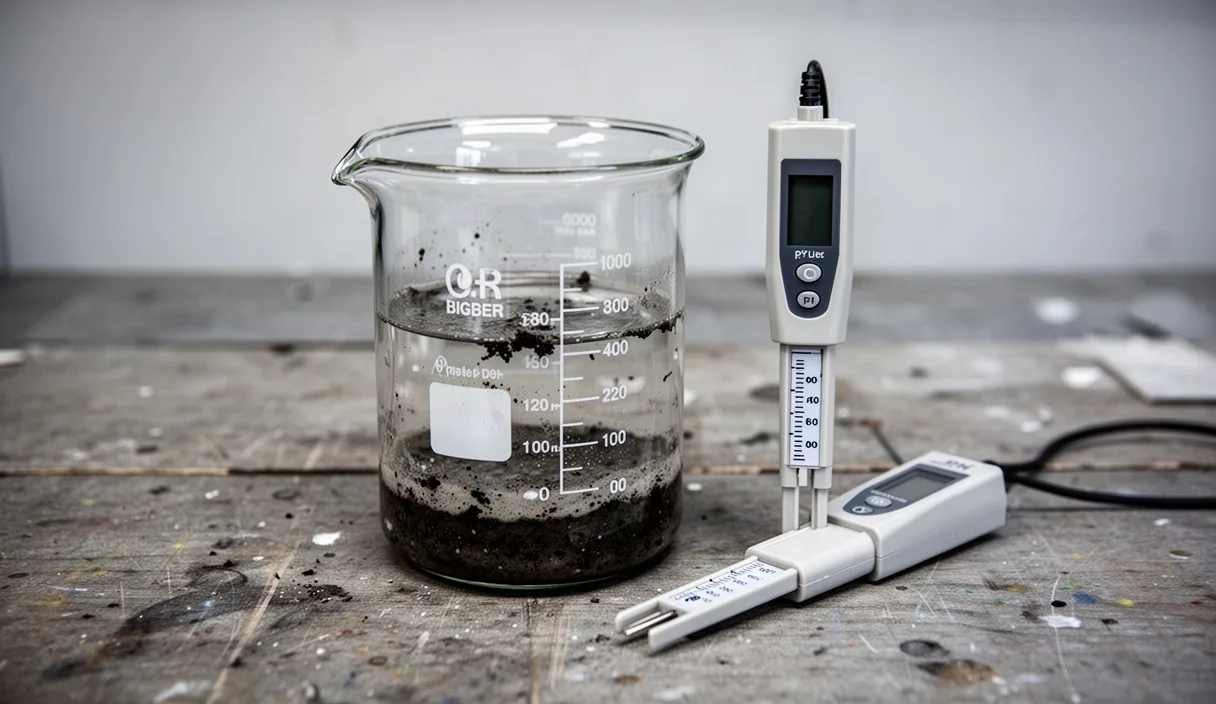
Effective crop management relies on verifying facts rather than guessing. When chlorosis appears in your beds, follow this immediate sequence: pull three affected plants, evaluate whether the yellowing dominates the base or the crown, and check the veins. Measure root-zone temperature using a soil probe and perform an onsite slurry test to determine pH and electrical conductivity. If your soil pH reads above 7.4, prioritize iron chelates; if the reading is balanced but lower leaves are fading, address nitrogen fertility.
Foliar sprays can preserve the current crop while the soil adjusts, but long-term success requires addressing the underlying soil biology and chemistry. If persistent chlorosis defies standard adjustments, collect composite soil and leaf tissue samples and send them to an accredited agricultural laboratory for complete trace mineral analysis. Laboratory testing confirms whether you face a genuine nutrient void or an environmental factor restricting nutrient uptake.
This guide serves educational purposes; consult your regional agricultural extension office for site-specific soil testing and plant health orders. Disclaimer